
 LeafSide 1-Week Meal Plan
Lifestyle Medicine
11 Pathways of Aging: Dr. Greger’s Plan to Slow Them Down
The 11 pathways of aging are not inevitable – and according to Michael Greger MD, each one can be slowed or blocked with the right foods, movement, and lifestyle habits. Think of your body like a control panel with eleven switches. Some turn on energy and repair. But too many of us accidentally leave the aging ones stuck on high. The good news: we can flip them toward renewal with plants, movement, and science-backed lifestyle changes.
The 11 pathways of aging – and how to counter them
Here’s what those 11 pathways of aging are, and exactly what to do about each one.
1. AMPK AMPK switches your body from storing fat to burning it. It’s essential for both weight control and longevity, helping your cells “clean house.” AMPK declines with age, but exercise and whole-plant foods help keep it active.
2. Autophagy Autophagy is your body’s cellular recycling system — breaking down damaged components and rebuilding them. Triggered by movement and light fasting, it slows aging. Deep-fried foods and excess animal protein impair this critical maintenance mechanism.
3. Cellular senescence Cellular senescence occurs when old “zombie cells” stop dividing but refuse to die, releasing signals that damage surrounding healthy cells. Quercetin- and fisetin-rich foods like strawberries, kale, and green tea help clear them out.
4. Epigenetics Your DNA’s aging clock can be influenced by lifestyle. Research points to 10–12% calorie restriction and folate-rich foods like lentils, soy, and broccoli as meaningful levers for slowing epigenetic aging.
5. Glycation Glycation occurs when sugar molecules bind to proteins, causing inflammation and accelerating tissue damage. Minimizing fried and processed foods — and avoiding smoking — are the most effective countermeasures.
6. IGF-1 Excess IGF-1, driven largely by high animal protein intake, overstimulates cellular growth pathways linked to accelerated aging and cancer risk. Plant protein keeps IGF-1 in a healthier range.
7. mTOR Like IGF-1, mTOR is a growth-signaling pathway that animal protein tends to overstimulate. A plant-centered diet naturally moderates mTOR activity, supporting longevity rather than accelerated cellular turnover.
8. Inflammation Chronic low-grade inflammation is one of the primary engines of aging — driving heart disease, cognitive decline, and metabolic dysfunction. Antioxidant-rich whole plants, exercise, and colorful vegetables are the most evidence-based tools to counter it.
9. Oxidation Oxidative stress damages cells, proteins, and DNA over time. A diet rich in phytonutrients and antioxidants — berries, leafy greens, legumes — is the most direct dietary defense.
10. Sirtuins Sirtuins are proteins that regulate cellular health and DNA stability. WFPB eating, adequate vitamin D, and consistent healthy habits support sirtuin activity and help keep cells functioning youthfully.
11. Telomeres Telomeres round out the list of 11 pathways of aging, and are the protective caps on your DNA strands that shorten with age. Shorter telomeres are associated with accelerated aging and disease. A whole-food, plant-based lifestyle is among the most studied interventions for telomere preservation.
Here’s a table summarizing the 11 pathways and what you can do to counter each one (thank you Dr. Greger!):
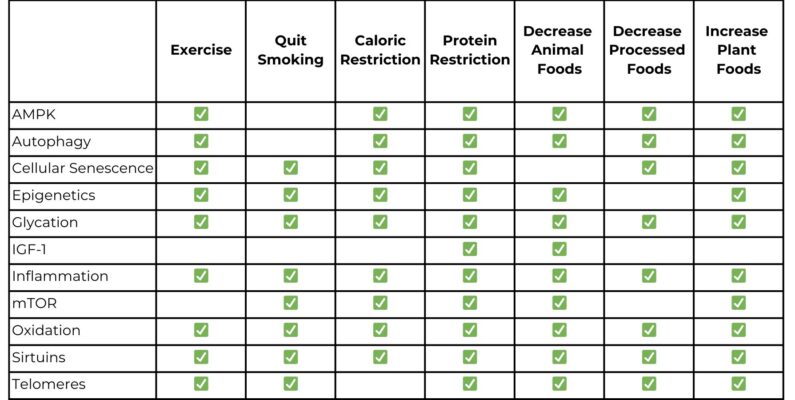
Dr. Greger’s Anti-Aging 8: the foods and habits that work
Beyond the 11 pathways of aging themselves, Michael Greger MD identified eight foods and lifestyle habits most strongly linked to living long and well:
- Whole plant foods – 95–100% of calories from unprocessed plants
- Beans and lentils – the number one longevity food across all Blue Zones
- Nuts and seeds – linked to better heart health and longer lifespan
- Sweet potatoes and whole grains – steady clean energy that feeds your gut microbiome
- Green tea and coffee – powerful antioxidants for brain and cellular health
- Water – still the healthiest beverage on earth
- Movement – just 15 minutes a day can add years to your life
- Social connection and purpose – a true longevity multiplier
Lessons from the longest-lived people on earth
Whether it’s Sardinia, Okinawa, or Loma Linda, the world’s Blue Zones share one pattern: they eat and live simply, consistently. Beans daily. Breakfast and lunch as the main meals. Nuts as snacks. Water and tea as drinks. Minimal animal products, rarely if ever. These aren’t wellness trends — they’re habits proven across centuries and multiple cultures. Every bite, sip, and step supports the 11 pathways of aging!
Frequently Asked Questions About the 11 Pathways of Aging
What are the 11 pathways of aging? The 11 pathways of aging identified by Michael Greger MD are AMPK, autophagy, cellular senescence, epigenetics, glycation, IGF-1, mTOR, inflammation, oxidation, sirtuins, and telomeres. Each represents a biological mechanism that contributes to aging and age-related disease — and each can be meaningfully influenced by diet and lifestyle.
Can you actually slow down aging with diet? Research strongly suggests yes. Multiple aging pathways — including inflammation, oxidation, telomere length, and cellular senescence — respond directly to dietary interventions, particularly whole-food, plant-based eating. While no diet stops aging entirely, the evidence for slowing it is substantial.
What foods slow down aging the most? According to Dr. Greger’s research, the foods most consistently linked to slowed aging are leafy greens, berries, legumes, nuts, seeds, whole grains, green tea, and coffee. These foods address multiple aging pathways simultaneously — reducing inflammation, combating oxidation, supporting autophagy, and protecting telomeres.
What is AMPK and why does it matter for the 11 pathways of aging? AMPK is a cellular energy sensor that shifts your body from fat storage to fat burning and triggers cellular cleanup processes. It declines naturally with age, but exercise and whole-plant foods help maintain AMPK activity — making it one of the most actionable aging pathways to target through lifestyle.
What are zombie cells and how do you get rid of them? Zombie cells — technically called senescent cells — are aged cells that stop dividing but refuse to die, releasing inflammatory signals that damage surrounding tissue. Foods rich in quercetin and fisetin, including strawberries, kale, and green tea, have been studied for their ability to help clear senescent cells.
What is the number one longevity food according to Blue Zones research? Beans and legumes are the single most consistent dietary predictor of longevity across all five Blue Zone populations. They appear in daily eating patterns in Sardinia, Okinawa, Loma Linda, Nicoya, and Ikaria — in different forms but with remarkable consistency.
How does animal protein affect aging? High animal protein intake elevates IGF-1 and mTOR — two growth-signaling pathways linked to accelerated aging and increased cancer risk when chronically elevated. Plant protein provides adequate nutrition while keeping these pathways in a healthier, longevity-promoting range.