
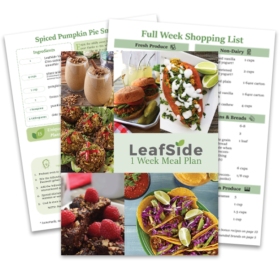
 LeafSide 1-Week Meal Plan
Plant-based Eating
What are Green Light Foods? The Simple WFPB Framework for Effortless Healthy Eating
If you’ve ever wondered what are green light foods and why nutrition experts keep talking about them, you’re about to discover one of the simplest frameworks for transforming your diet without calorie counting, macro tracking, or elaborate meal plans that fall apart by day three. This traffic light approach to eating — popularized by Dr. Michael Greger in How Not to Die — categorizes foods by their health impact, making daily choices almost automatic.
The timing couldn’t be more relevant. The average American spends over $15,000 on healthcare annually, fills at least four prescriptions, and manages symptoms of chronic conditions that didn’t have to develop in the first place. In our current healthcare system, treating chronic diseases consumes over 80% of healthcare spending — addressing symptoms, not root causes.
But here’s what the pharmaceutical industry won’t tell you: decades of global scientific research, including studies comparing genetic twins and populations who migrate to the US, confirm beyond reasonable doubt that lifestyle — not genes — determines about 80% of disease risk. And at the core of healthy lifestyle is diet.
What Are Green Light Foods?
The green light, yellow light, red light food framework works exactly like a traffic signal for your plate:
🟢 Green Light: Eat Freely These are whole plant foods — beans 🫘, lentils, vegetables, fruits 🍎, whole grains, nuts, and seeds. Green light foods form your dietary foundation. There’s no portion control needed, no guilt, no restriction. These foods are so nutrient-dense and health-promoting that you can enjoy them abundantly at every meal.
🟡 Yellow Light: Enjoy in Moderation Yellow light foods are minimally processed items that make green light foods more enjoyable. Think sauces, seasonings, and small additions that transform “healthy” into “delicious 😋.” These aren’t harmful, but they shouldn’t dominate your plate.
🔴 Red Light: Minimize or Skip Red light foods include ultra-processed products and animal products. They typically have high caloric density, minimal nutrition, and maximum long-term cost to your health.
The beauty of this system is its simplicity. Before each meal, ask yourself one question: “Am I choosing green, yellow, or red?” You don’t have to be perfect. You just have to trend green.
Why this Matters for Disease Prevention
In the 10th Anniversary Edition of How Not to Die, Dr. Greger demonstrates that a whole food plant-based dietary pattern built on plant-based foods can help slow, stop, and even reverse the top 15 causes of death — from heart disease to various cancers.
The science shows that eating primarily plant-based foods can:
- Change your epigenetics by activating anti-cancer, anti-inflammatory, and anti-aging genes
- Increase telomerase activity, the enzyme that protects your DNA 🧬 from aging
- Reverse arterial plaques that took decades to build, dissolving them throughout your body, including in your brain 🧠
- Restore the function of your endothelium — the delicate lining that keeps blood 🩸 flowing freely — at every meal and for the long haul
Nobody makes pharmaceutical-level profits when you eat lentils and greens, then go for a walk. So nobody tells you that this simple combination can be more powerful than just about anything in your medicine cabinet.
How to Start Using the Green Light Food System
The traffic light framework eliminates decision fatigue. Here’s how to implement it:
Stock your kitchen with green light foods. Fill your refrigerator and pantry with beans, lentils, whole grains, nuts, seeds, and an abundance of fruits and vegetables. When healthy options are the most accessible options, healthy choices become default choices.
Use yellow light foods strategically. A tahini-based dressing makes a kale salad irresistible. A flavorful curry sauce transforms plain chickpeas into a meal you’ll crave. Yellow light foods are tools for making green light foods delicious.
Don’t aim for perfection. The goal isn’t to eliminate all red light foods immediately. It’s to shift your overall pattern toward green. Progress matters more than perfection.
The Long-Term Impact of Choosing Green Light Foods
Consider two possible futures. In one, the same patterns continue — the afternoon exhaustion, the quiet worry about what the next blood test might reveal, the feeling that your body is slowly betraying you. Medications increase. Energy decreases.
In the other, you have sustained energy throughout the day. Your doctor is genuinely surprised by how much your numbers have improved. You’re not thinking about what you “can’t” eat — you’re enjoying meals that happen to be among the healthiest foods on the planet 🌎.
The difference between these futures often comes down to daily choices: green, yellow, or red? When you understand what green light foods are and make them the foundation of your diet, you stop outsourcing your health to a system that profits from illness. Instead, you take the wheel.
Frequently Asked Questions
What are green light foods in Dr. Greger’s system? Green light foods are whole plant foods that you can eat freely without restriction. This category includes all beans, lentils, vegetables, fruits, whole grains, nuts, and seeds. Dr. Greger designed this classification in How Not to Die to simplify healthy eating by identifying foods that actively promote health and can be enjoyed abundantly.
What’s the difference between green light and yellow light foods? Green light foods are unprocessed whole plant foods you can eat without limits, while yellow light foods are minimally processed items best enjoyed in moderation. Yellow light foods include things like sauces, seasonings, and condiments that make green light foods more enjoyable but shouldn’t form the bulk of your diet.
Why are animal products considered red light foods? Animal products are classified as red light foods because research links them to increased risk of chronic diseases including heart disease, certain cancers, and type 2 diabetes. They typically have high caloric density relative to their nutritional value and lack the fiber and phytonutrients found in whole plant foods.
Do I have to completely eliminate red light foods? No, the traffic light system isn’t about perfection. The goal is to trend green — making whole plant foods the foundation of your diet while minimizing red light foods over time. Small, consistent shifts toward green light foods can produce significant health improvements.
Can the green light food system help reverse chronic disease? Research compiled by Dr. Greger shows that a whole food plant-based diet emphasizing plant-based foods can help slow, stop, and in some cases reverse conditions like heart disease and type 2 diabetes. The diet works by reducing inflammation, improving arterial function, and activating protective genes.
What are some examples of green light foods to eat daily? The best green light foods to include daily are leafy greens, beans and lentils, berries, cruciferous vegetables like broccoli and cauliflower, whole grains like oats and quinoa, nuts, seeds, and a variety of colorful fruits and vegetables. Dr. Greger’s Daily Dozen checklist provides specific daily targets for these food groups.
How quickly can I see results? Many people report increased energy within days of shifting toward green light foods. Measurable improvements in blood pressure, cholesterol, and blood sugar often appear within weeks to months. Arterial improvements and disease reversal typically require longer-term consistency with the dietary pattern.