
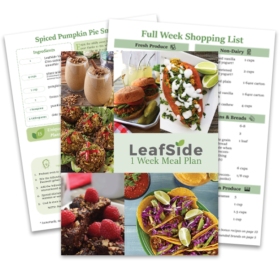
 LeafSide 1-Week Meal Plan
Lifestyle Medicine
National Men’s Health Month – The Science-Backed Path to Male Longevity
National Men’s Health Month arrives each June with an uncomfortable question: if men were the default subjects of health research for most of the last century, why do they still live 5–6 years less than women in the United States? The answer isn’t hidden in our genes – it’s sitting on our plates.
Chronic illnesses consume 80–90% of US healthcare costs, and roughly 80 percent of premature disease and death arise from day-to-day lifestyle choices, not genetic destiny. According to Dr. Michael Greger, M.D., founding member of the American College of Lifestyle Medicine and founder of NutritionFacts.org, genes account for only 10 to 20 percent of your risk from the top killers. The main risks are lifestyle, with food as the biggest factor. 🧬
The top threats to men’s longevity – heart disease, prostate cancer, type 2 diabetes, and cognitive decline – share common dietary causes. Eating plant-rich daily can break those threats and give men their power and vitality back, especially in the second half of life.
Cutting Through the Noise on Masculinity and Diet
Before diving into lifestyle medicine, it’s worth acknowledging that masculinity in the industrialized world has probably never been in more flux. The past century has seen enormous changes in work, schooling, family life, media messaging, and gender expectations that sit close to the core of identity.
In such flux, men become easy targets for identity-driven marketing: cowboys enjoying the healthy wilderness while smoking daily, or the persistent myth that real men eat meat, not salads.
A longer view of masculinity across generations and cultures cuts through the noise. The archetypal man has the courage and persistence to think for himself and take action, builds and keeps strength for healthy independence, and lives to share life wisdom with others.
If meat and drinking the milk of another species 🐮 led to strength and health, then how did the US arrive at the highest per-capita meat consumption with the worst health outcomes – and highest costs – of any industrialized country?
The First Foe Every Man Should Know 🫀
Coronary heart disease kills 383,000 Americans every year – the undisputed number one cause of death. For men, it strikes earlier and harder. But here’s what most doctors won’t spend ten minutes discussing during a check-up: more than 90 percent of heart attacks may be avoidable through lifestyle changes alone.
Starting with a plant-rich diet, then stacking on regular exercise, good sleep, and not smoking, heart risks can be cut dramatically.
As Dr. Caldwell Esselstyn, M.D. noted in The Game Changers: “In all of western civilization, there is nothing more common than coronary artery heart disease, and that is because of the foods that most people eat every day.”
Whole food plant-based (WFPB) eating is the only dietary pattern clinically proven to stop and reverse heart disease. If that’s the only thing WFPB could do against the number one killer, shouldn’t it be the default meal choice?
The Warning Signal Men Shouldn’t Ignore ❤️
Erectile dysfunction is often an early warning sign of cardiovascular disease. The arteries supplying blood flow to the penis are among the smallest in the body – so they reveal the effects of arterial plaques, chronic inflammation, and circulation problems well before larger arteries do. When blood flow is crimped there, it’s almost certainly being steadily crimped elsewhere.
For most of the 20th century, heart disease was considered inevitable with aging. But thanks to pioneers Nathan Pritikin, Dr. Dean Ornish, Dr. Caldwell Esselstyn, and Dr. Joel Kahn, it’s now clear that arterial plaques can be reversed. 💖
Dr. Ornish’s landmark 1998 paper demonstrated reversing heart disease with plant-based diet. His 2024 study showed reversal of early and mid-stage Alzheimer’s disease by clearing plaques in the brain’s arteries. Gumming up our circulation is not inevitable – if we eat plant-rich. 💚
Other Major Threats to National Men’s Health Month Awareness
Obesity and Type 2 Diabetes
On top of the usual problems of excess weight, obesity’s excess fat kills men’s testosterone. Fat cells are not just inert squishy cells but active chemical factories that disrupt hormones, including emitting an enzyme that converts testosterone to estrogen. Shedding excess body fat by 15% can boost testosterone by 150 points (ng/dL), and that effect grows with even higher fat loss.
Obesity also greatly increases the risk of type 2 diabetes, which afflicts 40 million Americans. Almost three times that number – 35% of Americans – are pre-diabetic.
Prostate Cancer
Prostate cancer is responsible for about 33,000 deaths annually. Cutting out animal products drops risk significantly, and as Dr. Ornish showed, going plant-based can stop and reverse prostate cancer.
Four Lifestyle Factors That Change Everything
Four simple lifestyle factors – not smoking, not being obese, getting at least half an hour of exercise a day, and eating plenty of plants regularly – have been shown to:
- Eliminate over 90 percent of diabetes risk
- Reduce heart attack risk by more than 80 percent
- Cut stroke risk in half
- Slash overall cancer risk by more than one-third
As Dr. Greger illustrates in How Not to Die: “While a sixty-year-old American man living in San Francisco has about a 5 percent chance of having a heart attack within five years, should he move to Japan and start eating and living like the Japanese, his five-year risk would drop to only 1 percent. Japanese Americans in their forties can have the same heart attack risk as Japanese in their sixties. Switching to an American lifestyle in effect aged their hearts a full twenty years.”
What Blue Zone Men Have in Common 🌍
The five longevity hotspots known as Blue Zones – the places on Earth with the highest number of centenarians – share a common feature: a diet that’s 85–100% whole food plant-based.
These Blue Zone centenarians aren’t tracking macros or experimenting with supplement stacks. They eat real, whole, plant-centered food their entire lives – and that single habit pays dividends in decades of cognitive sharpness, physical strength and mobility, and active living with family and friends. This is healthspan: not just years added to life, but life added to those years.
Why Plant-Rich Eating Works 🔬
WFPB diet works because it addresses multiple shared root causes: chronic inflammation 🔥, LDL cholesterol, insulin resistance, and oxidative stress. All of these are linked across heart disease, prostate cancer, diabetes, and cognitive decline.
Besides being rich in macro and micronutrients, whole plant foods bring abundant fiber – which feeds beneficial gut bacteria, binds excess cholesterol, and flushes it out of your body before it can form plaque. They also deliver phytonutrients and antioxidants that reduce systemic inflammation at the cellular level, protecting DNA 🧬 and tissues from oxidative damage.
Animal foods – especially processed meat and dairy – tend to have the opposite effect on each of these pathways.
As Walter Willett, the most-cited nutrition scientist on Earth, has explained: “The amino acids that come from animal sources tend to make our cells rev up and multiply faster. For example, there is accumulating evidence that high consumption of proteins from dairy sources is related to a higher risk of prostate cancer. That chain of cancer causation actually seems pretty clear.”
Practical Actions for Men’s Longevity 💪
- 🫘 Eat beans every single day – Legumes are the one food shared by every Blue Zone’s daily diet and a cornerstone of Dr. Greger’s Daily Dozen.
- 🥦 Go greens and cruciferous at least once daily – Broccoli, kale, and cauliflower contain precursors to sulforaphane, one of the most-researched anticancer compounds in food science. It’s activated when these vegetables are chewed, helping your body clear carcinogens and potentially suppressing tumor growth. Nitrates in leafy greens 🥬 support nitric oxide production – the same pathway that governs healthy blood flow throughout the body.
- 🧠 Feed your brain berries – Blueberries and strawberries are linked to reduced risk of cognitive decline.
- ♂️ Prioritize nuts and seeds – These are sources of new life, packed with nutrients. For men specifically, the lignans in flaxseeds and the isoflavones in soy foods are phytoestrogens that help testosterone. Contrary to their name and bro-science, they actually block excess estrogen. Aim for at least 1 tablespoon of ground flaxseeds per day, or more if addressing enlarged prostate. Pumpkin seeds also win. Pistachios are noteworthy for their improvement of erectile function.
- 🛑 Avoid dairy and meat – Besides their usual risks, these foods accelerate prostate growth and cancer while delivering saturated fats that suppress testosterone.
- 📅 Make WFPB your default, not your decision – Blue Zone men didn’t think about their food. It was simply how they ate. Remove the daily willpower variable and build plant-based eating into your routine.
The Science Is In
The biggest threats to men’s health are largely within your control – and the same plate of food that protects your heart also protects your brain, your energy, and your strength for decades to come.
You don’t have to accept a slower, sicker version of yourself as inevitable. The men living well into their 80s and 90s in the Blue Zones didn’t have better genes – they had better defaults and habits. Start with what’s on your fork today, and build from there. 💪🌱
Frequently Asked Questions About National Men’s Health Month
Why is National Men’s Health Month observed in June? National Men’s Health Month has been observed each June since 1994 to raise awareness about preventable health problems affecting men. The month encourages early detection and treatment of diseases including heart disease, prostate cancer, and diabetes – conditions where lifestyle interventions can make significant differences.
What is the leading cause of death for men in the United States? Coronary heart disease is the leading killer, responsible for 383,000 American deaths annually. Men are affected earlier and more severely than women. However, research shows that more than 90 percent of heart attacks may be preventable through lifestyle changes including plant-based eating, regular exercise, adequate sleep, and not smoking.
Can diet really affect prostate cancer risk? Yes, diet significantly impacts prostate cancer risk and progression. Research by Dr. Dean Ornish has shown that plant-based eating can stop and reverse prostate cancer. Cutting out animal products drops risk significantly, while dairy and meat consumption accelerate prostate growth and cancer development.
Why do men have lower life expectancy than women? Men in the US live 5–6 years less than women on average, largely due to lifestyle factors rather than genetics. Genes account for only 10–20 percent of risk from top killers. About 80 percent of premature disease and death arise from day-to-day choices including diet, exercise, sleep, and smoking habits.
What foods should men eat for longevity? The longest-lived men in Blue Zone regions eat diets that are 85–100% whole food plant-based. Key foods include daily legumes (beans, lentils), cruciferous vegetables (broccoli, kale, cauliflower), berries for brain health, and nuts and seeds – particularly flaxseeds and pumpkin seeds for men’s hormonal health.
Is erectile dysfunction a sign of heart disease? Erectile dysfunction often serves as an early warning sign of cardiovascular disease. The arteries supplying the penis are among the smallest in the body, so they reveal arterial plaque buildup, chronic inflammation, and circulation problems before larger arteries do. When blood flow is compromised there, it’s likely being compromised elsewhere.
How much can lifestyle changes reduce disease risk? Four lifestyle factors – not smoking, maintaining healthy weight, exercising 30 minutes daily, and eating plant-rich foods – can eliminate over 90 percent of diabetes risk, reduce heart attack risk by more than 80 percent, cut stroke risk in half, and slash overall cancer risk by more than one-third.