
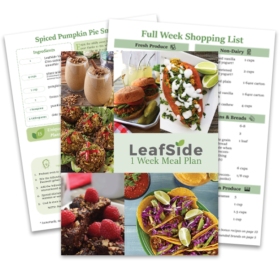
 LeafSide 1-Week Meal Plan
Nutrition Science
What is How Not to Diet? Dr. Greger’s Science-Backed Guide to Sustainable Weight Loss
What if sustainable weight loss didn’t require calorie counting, constant hunger, or the exhausting rollercoaster of yo-yo dieting? That’s exactly what is How Not to Diet — Dr. Michael Greger’s groundbreaking book that presents nearly 5,000 scientific references proving that lasting weight management isn’t about eating less, it’s about eating better. When you choose the right foods, your body does the hard work for you.
The statistics paint a stark picture of why this matters. Processed food companies and fast food restaurants spend over $14 billion annually on advertising, mostly pushing products engineered to hit the “bliss point” — the exact combination of salt, refined sugar, and fat designed to keep you eating more. With nutrients and fiber stripped out, your natural “I’m full” signals simply don’t work. That’s profitable for Big Food, but devastating for your health.
Meanwhile, chronic illnesses like heart disease and diabetes account for 80% of the $4 trillion flowing through U.S. healthcare annually. The system, unfortunately, profits from your decline — and there’s no Big Broccoli running Super Bowl ads to counter the messaging.
What is How Not to Diet Really About?
So what does “eating better” look like in practice? Instead of vague advice or extreme rules, How Not to Diet breaks weight management down into clear, practical factors you can implement immediately. Each one works with your biology — turning down hunger, helping you feel full longer, covering all your nutritional needs, and guiding your metabolism toward its natural healthy set point.
Here are five key concepts from the book that make sustainable weight loss click:
Your stomach counts volume, not just calories.
Our stomachs hold about four cups of volume. Fill those cups with whole plants — vegetables 🫑, fruits 🍎, legumes 🫘, whole grains 🌾 — and fullness signals arrive automatically. But when you consume processed foods, you take in hundreds of excess calories that hit your bloodstream before your brain gets the memo to stop eating.
Fiber is the off-switch the food industry removed.
When you eat fiber-rich plants, your gut bacteria ferment that fiber into short-chain fatty acids. These critical compounds travel to your brain and signal, “We’re full down here!” That feedback loop is your natural appetite regulation system.
Animal products contain zero fiber, and processed foods contain almost none. Without fiber, your stomach’s off-switch never flips, leading to chronic overeating. This is why it’s nearly impossible to maintain a healthy weight long-term without plenty of plants.
Inflammation jams your hunger signals.
Saturated fat from meat and dairy inflames your hypothalamus — the brain 🧠 region that registers fullness. When it’s inflamed, it can’t accurately detect energy status. It’s like a fuel gauge stuck on empty. You feel hungry even when you’re not.
Whole plant foods reverse this. They’re inherently anti-inflammatory, rich in antioxidants and phytonutrients that calm the system and restore accurate signaling.
Processing is pre-digestion.
When food companies pulverize whole grains into flour, they’ve done the mechanical breakdown your body was supposed to do. Calories absorb too quickly. Blood sugar spikes. Hunger returns within the hour.
For example, whole oats digest slowly, releasing energy over hours. But processed oat or wheat flour hits your bloodstream like a sugar bomb. Same ingredient — wildly different metabolic results.
When you eat matters too.
The same calories consumed in the morning versus evening produce different outcomes. Your metabolism, insulin sensitivity, and digestion all run more efficiently earlier in the day. A 400-calorie breakfast is processed differently than a 400-calorie late dinner. This isn’t willpower — it’s chronobiology.
This is why a substantial breakfast, medium lunch, and lighter dinner — the classic “Breakfast like a King, Lunch like a Prince, Dinner like a Pauper” maxim — can lead to better weight management and metabolic health, even when total calories stay the same. Better sleep also supports better weight regulation.
The Green-Light Food Framework
Understanding what is How Not to Diet becomes simple when you apply one filter before any meal: Is this a green-light food?
🟢 Green-light foods are whole plants with nothing bad added and nothing good taken away. Vegetables. Fruits. Legumes. Intact whole grains. Nuts and seeds. Eat freely, because these foods trigger satiety correctly.
🔴 Red-light foods are processed, refined, and engineered to override your satiety signals — avoid these.
If your plate is mostly or entirely green-light foods, you’re winning 🏆. No apps required. No calorie math. Just a simple filter that cuts through the noise and confusion of modern nutrition advice.
Why Knowledge Alone Isn’t Enough
When you eat foods designed by nature — not food scientists — weight loss becomes a side effect of better health. No calorie counting. No misery. Just plants doing what plants do best 🌿.
The challenge isn’t understanding what to eat. The primary reason diseases tend to run in families may be that diets tend to run in families — our food environments shape our choices far more than our intentions. Changing those patterns requires making whole-food, plant-based eating convenient and accessible in daily life.
The science in How Not to Diet is clear: sustainable weight management comes from working with your body’s natural systems, not fighting against them. Fill your stomach with fiber-rich whole plants, reduce inflammation, eat more of your calories earlier in the day, and let your biology handle the rest.
Frequently Asked Questions About How Not to Diet
What is How Not to Diet by Dr. Michael Greger? How Not to Diet is a comprehensive, science-backed book by Dr. Michael Greger that examines the evidence behind sustainable weight loss. Drawing on nearly 5,000 scientific references, it argues that lasting weight management comes from eating whole plant foods that work with your body’s natural hunger and satiety signals, rather than from restrictive dieting or calorie counting.
Does How Not to Diet recommend counting calories? No, the book’s core premise is that calorie counting is unnecessary when you eat the right foods. Whole plant foods are naturally low in calorie density and high in fiber, which triggers your body’s fullness signals automatically. The focus shifts from how much you eat to what you eat.
What are green-light foods in How Not to Diet? Green-light foods are whole plant foods with nothing bad added and nothing good taken away — vegetables, fruits, legumes, intact whole grains, nuts, and seeds. Dr. Greger recommends eating these freely because they naturally regulate appetite and support healthy weight without restriction.
How does fiber help with weight loss according to the book? Fiber-rich plant foods are fermented by gut bacteria into short-chain fatty acids, which signal fullness to your brain. This natural feedback loop regulates appetite automatically. Since animal products contain zero fiber and processed foods contain almost none, a whole-food plant-based diet is essential for this system to function properly.
Why does How Not to Diet recommend eating more food earlier in the day? The book cites chronobiology research showing that your metabolism, insulin sensitivity, and digestion work more efficiently in the morning. The same number of calories consumed at breakfast versus late dinner produces different metabolic outcomes, making front-loading your eating a simple strategy for better weight regulation.
Can How Not to Diet help with conditions beyond weight loss? Yes, because the approach centers on whole plant foods that are anti-inflammatory and nutrient-dense, it addresses the root causes of many chronic conditions. Heart disease, type 2 diabetes, and other lifestyle-related illnesses often improve when people shift to the eating pattern Dr. Greger recommends.
Is How Not to Diet a vegan diet book? While the diet outlined is entirely plant-based, the book frames its recommendations through the lens of scientific evidence rather than ethics or environmental concerns. Dr. Greger’s focus is on what the research shows works best for sustainable weight loss and overall health, which consistently points to whole plant foods.