
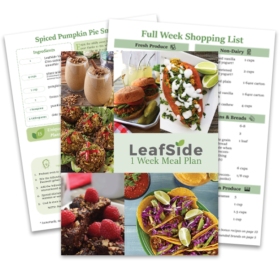
 LeafSide 1-Week Meal Plan
Plant-based Eating
My Child is a Vegan – A Parent’s Practical Guide to Raising a Healthy Plant-Based Teen
Your child sat down at dinner, looked you in the eye, and announced they were going vegan. Maybe you smiled and said “that’s great, honey” – and then spent the next hour quietly spiraling. Are they going to get enough protein? What do I even cook?
If that sounds familiar, you’re not alone. When your child chooses a healthy, plant-based diet, the questions stack up fast. The good news: the science is genuinely reassuring, the practical hurdles are smaller than they look, and your kid made a decision that could benefit their health for decades. This guide will walk you through everything you need to know – nutrient by nutrient, myth by myth.
The Research is on Your Side
Let’s acknowledge something first: your concern isn’t irrational. Most of us grew up learning that animal protein was the cornerstone of a growing body, that milk built strong bones, and that a meal without meat was somehow incomplete. Those messages are deeply ingrained, and they don’t vanish overnight.
But nutritional science has moved significantly. The Academy of Nutrition and Dietetics – the largest organization of food and nutrition professionals in the United States – states “appropriately planned vegetarian, including vegan, diets are healthful, nutritionally adequate, and may provide health benefits for the prevention and treatment of certain diseases.” That’s not a fringe opinion. That’s the gold-standard dietitian consensus.
Your job isn’t to reverse your child’s decision. Your job is to make sure it’s done well. And “done well” is more achievable than you think. 🥦
Dr. Michael Greger, bestselling author of How Not to Die and founder of NutritionFacts.org, is one of the most cited plant-based nutrition researchers working today. His position – consistent across years of published work – is that whole-food plant-based (WFPB) diets provide ample protein, fiber, and micronutrients through legumes, whole grains, and vegetables. And protein deficiency on a varied WFPB diet is essentially unheard of in developed countries when calories are sufficient. 💪
That last part matters. Protein is not the problem most parents assume it is. Every whole plant food contains some protein, and foods like lentils, tofu, tempeh, edamame, quinoa, and hemp seeds are genuinely protein-dense. A teenager eating a varied plant-based diet can easily meet their protein requirements on a varied WFPB diet. The old rule about combining complementary proteins at every meal? Nutrition science retired that decades ago.
The Nutrients That Actually Need Attention
Here’s the practical truth: a few nutrients do need deliberate attention on a plant-based diet. None of them require exotic foods or elaborate meal planning – but they do require knowing what they are.
Vitamin B12 – The One True Non-Negotiable
B12 is the one nutrient a strict WFPB diet doesn’t reliably provide. The FDA’s recommended daily intake for infants, children and adolescents is 0.4 to 2.8 mcg, and 2.4 to 2.8 mcg for adults. Fortunately, vegan-friendly vitamin B12 supplements are readily available, and even come in gummy forms your child will love.
Vitamin D – A Universal Concern, Not a Vegan One
Here’s something that surprises a lot of people: many Americans are vitamin D insufficient regardless of diet. This isn’t a plant-based problem – it’s a sunlight problem. The FDA recommends from 10 to 15 mcg (400–600 IU) for infants, children, and adolescents, then 15 to 20 mcg (600–800 IU) for adults. Look for vegan-certified lichen-based D3, which is widely available.
Omega-3s – Think Algae, Not Fish
You’ve probably heard that fish is the best source of omega-3 fatty acids. What the fish-oil industry doesn’t emphasize: fish get their omega-3s from algae. You can skip the fish entirely and go straight to the source. Algae-based omega-3 supplements (EPA and DHA) are the gold-standard plant source, widely available, and far more environmentally sustainable. In the meantime, flaxseed, chia seeds, and walnuts are excellent dietary sources of ALA, the plant-based omega-3 precursor 🐟➡️🌿. Conversion from ALA to EPA/DHA is limited in the body, which is why an algae supplement is worth considering for growing teens.
Iron – Pair It with Vitamin C
Plant-based iron (called non-heme iron) is absorbed less efficiently than iron from meat – but that gap closes considerably when it’s paired with vitamin C. Lentils with tomatoes, spinach with lemon juice, beans with bell pepper – these combinations happen naturally in good plant-based cooking. Iron-rich plant foods include lentils, kidney beans, tofu, tempeh, pumpkin seeds, and fortified whole-grain cereals. 🫘
Calcium – It’s Not Just Dairy
Calcium is available from a wide range of plant sources: fortified plant milks, kale, bok choy, broccoli, white beans, and tofu set with calcium sulfate. If your teen is drinking fortified oat or soy milk daily, they’re likely fine. Variety, as with most things in plant-based eating, is the best insurance.
Practical Tips for Making It Work at Home
The nutrition science is one thing. The dinner table is another. Here’s how to make day-to-day life manageable without becoming a short-order cook. 🍽️
Start with what already works. Pasta with marinara, bean tacos, lentil soup, stir-fried tofu with rice, veggie burgers – most families already eat several plant-based meals without realizing it. Start there and build out, rather than treating every dinner as a from-scratch reinvention.
Get your teen involved. This is their decision, which means it can also be their contribution. Teenagers who choose plant-based eating are often more motivated to learn about cooking and nutrition than their parents expect. Make them responsible for one dinner a week. Let them pick recipes. The more ownership they take, the less burden falls on you.
Learn the WFPB framework. Whole-food plant-based eating – the pattern backed by the strongest health evidence – emphasizes whole grains, legumes, vegetables, fruits, nuts, and seeds while minimizing processed foods. Dr. Greger’s Daily Dozen checklist is one of the most practical tools available for understanding what a nutritionally complete day of plant-based eating actually looks like. Bookmark it.
Use the “green light foods” concept. If your teen is navigating new territory and needs a simple mental framework for what to eat more of, green light foods is a straightforward WFPB-based approach that cuts through the noise. No calorie counting, no protein math – just a clear, evidence-based guide to building a healthy plate. 🟢
Stock the pantry strategically. A plant-based teen with a stocked pantry is infinitely easier to feed than one who opens the fridge and finds nothing that works for them. Staples to keep on hand: canned lentils and beans, frozen edamame, tofu, tempeh, whole grains (brown rice, quinoa, oats), nut butters, seeds (hemp, chia, flax), fortified plant milk, and a variety of vegetables. With these in the house, your teen can build a nutritionally solid meal in minutes.
Consider fiber a feature, not a footnote. One of the most underrated benefits of a plant-based diet is its naturally high fiber content – and fiber is now recognized as one of the most important nutrients for long-term health, supporting everything from gut microbiome diversity to blood sugar regulation to cardiovascular health. A teen eating lentils, vegetables, whole grains, and fruit is getting something most American adults never manage. 🌾
Don’t stress about perfect. A teen who eats mostly whole plant foods, takes a B12 supplement, and occasionally has a veggie pizza at a birthday party is doing great. Nutritional perfectionism is a bigger risk than an occasional deviation from the ideal WFPB pattern.
Bite-Sized Facts 🌱
- The Academy of Nutrition and Dietetics officially supports well-planned vegan diets as healthful and nutritious at all life stages, including adolescence.
- Protein deficiency on a varied plant-based diet is essentially unheard of when calorie needs are met – legumes, tofu, tempeh, edamame, quinoa, and hemp seeds all deliver.
- Algae-based omega-3s are the original source – fish get their omega-3s from algae, so you can go straight to the source with an algae-based EPA/DHA supplement.
- Non-heme (plant) iron absorption improves significantly when paired with vitamin C – combine iron-rich foods with tomatoes, citrus, or bell peppers.
Frequently Asked Questions About Raising a Vegan Child
Is a vegan diet safe for teenagers? Yes. The Academy of Nutrition and Dietetics states that well-planned vegan diets are healthful and nutritious at all life stages, including adolescence. The key phrase is “well-planned” – a teenager who eats a variety of whole plant foods and supplements vitamin B12 has a diet that meets or exceeds standard nutritional guidelines. Teens who are growing rapidly may need to pay particular attention to calorie sufficiency, but protein deficiency is rare when overall food intake is adequate.
My child is a vegan – will they get enough protein? Almost certainly, yes. Whole plant foods collectively supply all essential amino acids. High-protein plant foods include lentils, black beans, chickpeas, tofu, tempeh, edamame, quinoa, and hemp seeds. A teen eating a varied diet with these foods regularly will easily meet their protein requirements. For teens in active growth phases, needs may be slightly higher – but a varied diet rich in legumes, whole grains, and plant proteins accommodates this naturally. The outdated idea that plant proteins must be “combined” in the same meal to be complete has been retired by mainstream nutrition science.
How do I make sure my vegan teen gets enough calcium without dairy? Calcium is available from several plant sources: fortified plant milks (oat, soy, almond – check that they’re fortified to roughly 300 mg per cup), kale, bok choy, broccoli, white beans, and tofu set with calcium sulfate. If your teen is consuming 2–3 cups of fortified plant milk daily and eating a variety of vegetables and legumes, their calcium intake is likely on track. A yearly check-in with a pediatrician or registered dietitian can confirm this with a simple blood panel if you’re concerned.
Will my child be getting enough iron on a vegan diet? Plant-based iron (non-heme iron) is absorbed somewhat less efficiently than iron from meat, but this is easily compensated for by pairing iron-rich foods with vitamin C – for example, lentils with tomatoes, or spinach with lemon juice. Iron-rich plant foods include lentils, kidney beans, tofu, tempeh, pumpkin seeds, and fortified cereals.
My child is a vegan and I’m worried about eating out as a family – is this realistic? More realistic than ever. Most restaurants now offer plant-based options, and chains that don’t are increasingly the exception. The more practical shift is at home: identify the meals your family already makes that happen to be plant-based (pasta, bean tacos, lentil soup, stir-fries, veggie burgers), and build from there. Getting your teen involved in cooking one dinner per week also shares the load and gives them ownership of the transition.